
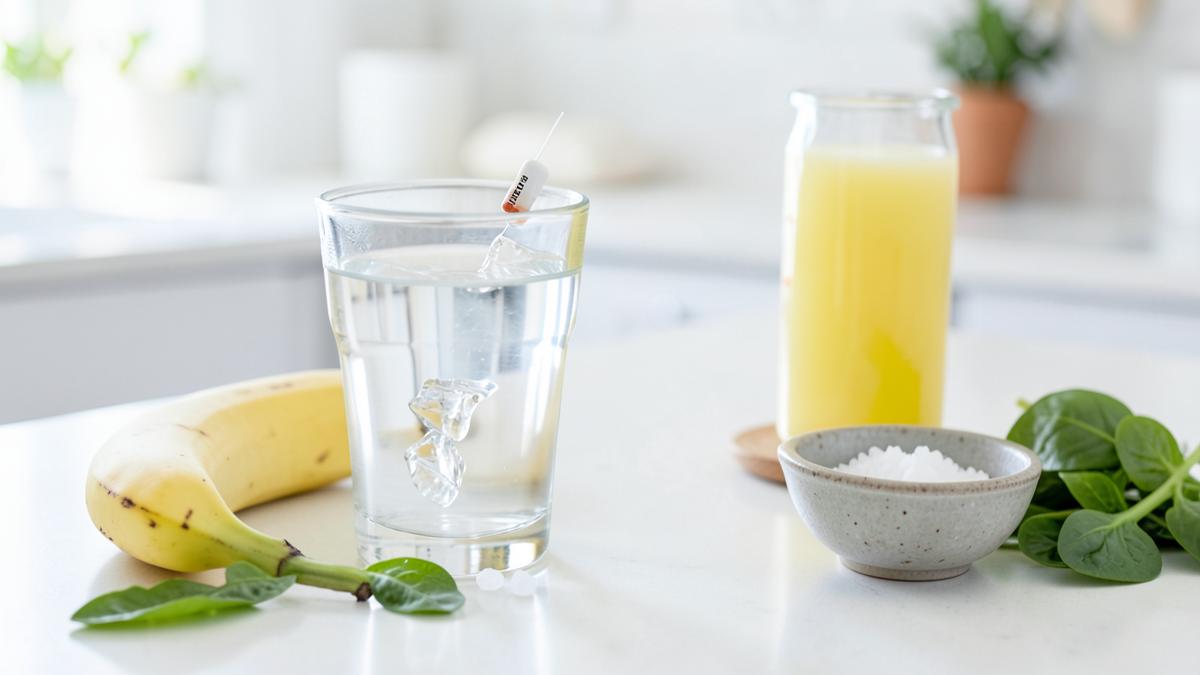
Electrolyte powders went from an endurance-athlete niche to a mainstream daily habit. Some of that is real physiology. A lot of it is marketing. Here is how to tell which applies to you.
What Electrolytes Do
Electrolytes are minerals that carry an electrical charge in body fluid. They regulate hydration, nerve signalling, muscle contraction, and blood pH.
| Electrolyte | Main job | Daily target (adults) |
|---|---|---|
| Sodium | Fluid balance, nerve signals | 1,500–2,300 mg |
| Potassium | Muscle and heart function, blood pressure | 3,400 mg (men), 2,600 mg (women) |
| Magnesium | 300+ enzyme reactions, muscle relaxation | 400–420 mg (men), 310–320 mg (women) |
| Calcium | Muscle contraction, bone | 1,000–1,200 mg |
| Chloride | Fluid balance, stomach acid | 2,300 mg |
Notice the pattern: most people in Western countries get plenty of sodium and chloride, and fall short on potassium and magnesium. Most commercial electrolyte packets are sodium-heavy — which is the opposite of what the average sedentary person is missing.
Who Actually Needs to Supplement
Yes, likely useful:
- Training or working hard for more than 60–90 minutes, especially in heat
- Heavy sweaters — visible salt crust on your skin or clothes after a session
- Endurance events: long runs, rides, hikes, matches
- Low-carb or keto diets, where the body excretes more sodium
- Recovering from vomiting, diarrhoea, or illness
- Fasting for extended periods
Probably not needed:
- Ordinary desk-based days with normal meals
- Gym sessions under an hour
- Anyone already eating a salty, varied diet
- "General hydration" — water plus food covers it
Sweat Rates and Sodium Loss
Sweat sodium varies enormously between people — from 200 mg to 2,000 mg per litre. Sweat rates run 0.5–2 litres per hour during hard exercise.
A one-hour gym session might cost you 300–600 mg of sodium: less than a bowl of soup. A three-hour summer ride could cost 3,000 mg or more, which food alone will not conveniently replace mid-effort. That is the honest dividing line.
Getting Electrolytes From Food
| Food | Key electrolyte | Amount |
|---|---|---|
| Banana (medium) | Potassium | 420 mg |
| Baked potato with skin | Potassium | 925 mg |
| Spinach, cooked (1 cup) | Magnesium | 157 mg |
| White beans (1 cup) | Potassium | 1,000 mg |
| Pumpkin seeds (28 g) | Magnesium | 156 mg |
| Coconut water (240 ml) | Potassium | 600 mg |
| Greek yogurt (170 g) | Calcium | 190 mg |
| Pickle juice (60 ml) | Sodium | ~900 mg |
| Table salt (1/4 tsp) | Sodium | 575 mg |
📷 Track these foods instantly
Scan any food from this article with our free AI scanner — get instant nutrition facts.
Scan Food Free →For most people, the effective plan is boring: eat potatoes, beans, leafy greens, dairy, and nuts, and salt your food to taste.
Making Your Own Electrolyte Drink
Per litre of water:
- 1/4 tsp salt (~575 mg sodium)
- 1/8 tsp lite salt or potassium chloride (~350 mg potassium)
- 1–2 tbsp lemon or lime juice
- Optional: 1–2 tbsp honey or maple syrup for carbohydrate during long efforts
Cost: a few cents. Nutritionally, this matches most $2 sachets.
What to Look For in a Commercial Product
- Sodium 300–1,000 mg per serving for exercise use; lower is largely decorative
- Potassium at least 200 mg
- Magnesium 50–100 mg, ideally citrate or glycinate
- No megadoses of vitamins you already get from food
- Sugar is not the enemy during long endurance work — carbohydrate improves fluid absorption
Signs You Might Be Low
Cramping late in a session, headaches after heavy sweating, unusual fatigue in heat, dizziness on standing after long exercise, and craving salt. None of these are diagnostic on their own, and dehydration or under-fuelling produce the same symptoms — check those first.
Frequently Asked Questions
Can you overdo electrolytes? Yes. Excess sodium raises blood pressure in salt-sensitive people, and potassium supplements can be dangerous for anyone with kidney disease or on certain blood-pressure medications. Food-based intake is self-limiting; pills are not.
Are sports drinks the same? Similar minerals, more sugar. Useful during long endurance work, unnecessary at a desk.
Do I need electrolytes while fasting? Beyond about 24 hours, sodium and potassium become worth adding, especially if you are active.
Is coconut water a good electrolyte drink? Great potassium, low sodium. Fine for recovery, insufficient alone for heavy sweat replacement.
Want to know exactly how much potassium and sodium your meals contain? Scan your plate with FoodNutriScan for a full micronutrient breakdown.
Did you find this helpful?
Written by the FoodNutriScan Team
Evidence-based nutrition content to help you make smarter food choices.
Browse all articles →Ready to track your nutrition?
Scan any food and get instant AI analysis. Free, no subscription, no download.
Scan Your Food Free →