
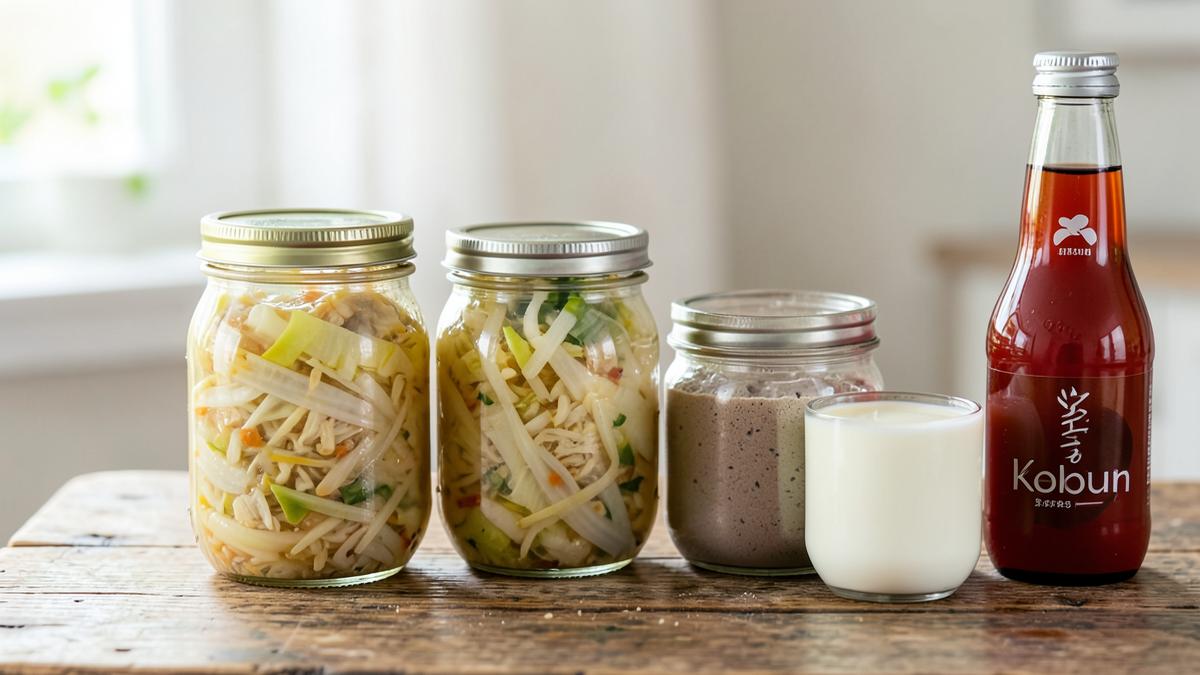
In 2021 a Stanford randomised trial did something unusual: it pitted a high-fibre diet against a fermented-food diet over 10 weeks. The fermented-food group increased gut microbial diversity and lowered 19 inflammatory markers. The high-fibre group did not. That single study reshaped how nutritionists talk about gut health — and fermented foods have been mainstream ever since.
Why Fermentation Works
Fermentation uses bacteria or yeast to convert sugars into acids, gases, or alcohol. Three things happen that matter nutritionally:
- Live microbes arrive in your gut, some of which transiently colonise and interact with your resident bacteria
- Nutrients become more available — fermentation breaks down phytates and can increase B vitamins and vitamin K2
- Postbiotics form — short-chain fatty acids and peptides produced during fermentation that have anti-inflammatory effects on their own
Not every fermented food contains live cultures at the point you eat it. Bread, beer, and most shelf-stable pickles are pasteurised or baked, which kills the microbes. They still offer the nutrient changes, just not the live ones.
Fermented Foods With Live Cultures
| Food | Live cultures | Typical serving | Notes |
|---|---|---|---|
| Kefir | Yes, 30+ strains | 240 ml | The most diverse of the common options |
| Yogurt (live cultures) | Yes | 170 g | Check for "live and active cultures" |
| Kimchi (refrigerated) | Yes | 50 g | Also high in fibre and capsaicin |
| Sauerkraut (refrigerated) | Yes | 50 g | Shelf-stable jars are pasteurised — no live cultures |
| Kombucha | Yes | 240 ml | Watch added sugar; many brands hit 12 g+ |
| Miso | Yes if unpasteurised | 1 tbsp | Add after cooking; boiling kills cultures |
| Tempeh | Cooked, so limited | 100 g | Excellent protein — 19 g per 100 g |
| Natto | Yes | 50 g | Highest known food source of vitamin K2 |
| Skyr | Yes | 170 g | ~17 g protein per serving |
| Traditional pickles (brine) | Yes | 2 spears | Vinegar pickles have none |
What the Evidence Actually Supports
Strong:
- Increased gut microbiome diversity
- Reduced markers of systemic inflammation (IL-6, IL-10, IL-12)
- Improved lactose tolerance from yogurt and kefir
- Reduced antibiotic-associated diarrhoea
Moderate:
- Improved blood pressure and cholesterol from regular fermented dairy
- Reduced type 2 diabetes risk in observational studies of yogurt eaters
- Modest gut-symptom improvement in IBS for some individuals
Preliminary:
- Mood and anxiety effects via the gut–brain axis
- Immune modulation and reduced respiratory infection frequency
- Skin conditions such as eczema
How Much to Eat
The Stanford protocol worked up to six servings a day, which is more than most people will sustain. A realistic and still meaningful target:
- Start: one serving a day for two weeks
- Build: two to three servings a day across at least two different foods
- Vary the sources — different foods carry different bacterial strains, and diversity is the point
📷 Track these foods instantly
Scan any food from this article with our free AI scanner — get instant nutrition facts.
Scan Food Free →Expect some gas and bloating in the first week. That is a normal adjustment as the microbial mix shifts. Increase slowly rather than pushing through discomfort.
A Simple Day of Fermented Foods
- Breakfast: kefir smoothie with berries
- Lunch: a side of kimchi or sauerkraut with the main meal
- Snack: skyr or live-culture yogurt with nuts
- Dinner: miso stirred into soup off the heat, or tempeh in a stir-fry
That is four servings without cooking anything unusual.
Buying Tips
- Refrigerated section only for kraut, kimchi, and pickles — shelf-stable means pasteurised
- Look for "live and active cultures" or "unpasteurised" on the label
- Ingredients should be short: vegetables, salt, water, spices. Vinegar in the list means it was pickled, not fermented
- Watch sodium in kraut and kimchi (~200–400 mg per 50 g serving) and sugar in kombucha
- Cloudiness and bubbles are signs of an active ferment, not spoilage
Who Should Be Cautious
People with histamine intolerance often react poorly to fermented foods. Anyone severely immunocompromised should discuss live-culture foods with their clinician. And if you have SIBO, fermented foods can worsen symptoms in the short term — work with a dietitian on sequencing.
Frequently Asked Questions
Are fermented foods better than probiotic pills? They deliver a wider range of strains alongside fibre, protein, and postbiotics, at a much lower cost. Supplements are useful for targeted clinical situations.
Does cooking destroy the benefits? Heat kills live cultures, but the nutrient and postbiotic changes survive. Add miso and kimchi at the end of cooking to preserve the microbes.
Is kombucha worth it? For live cultures, yes — but check sugar content. Some bottles carry as much as a soft drink.
Do I need to eat them every day? Consistency matters more than volume. Most fermented-food microbes are transient, so regular intake keeps the effect going.
Can I ferment at home? Sauerkraut needs only cabbage and salt, and it is nearly foolproof. Start there.
Tracking how your gut-friendly meals stack up on fibre and protein? Scan them with FoodNutriScan for an instant breakdown.
Did you find this helpful?
Written by the FoodNutriScan Team
Evidence-based nutrition content to help you make smarter food choices.
Browse all articles →Ready to track your nutrition?
Scan any food and get instant AI analysis. Free, no subscription, no download.
Scan Your Food Free →