
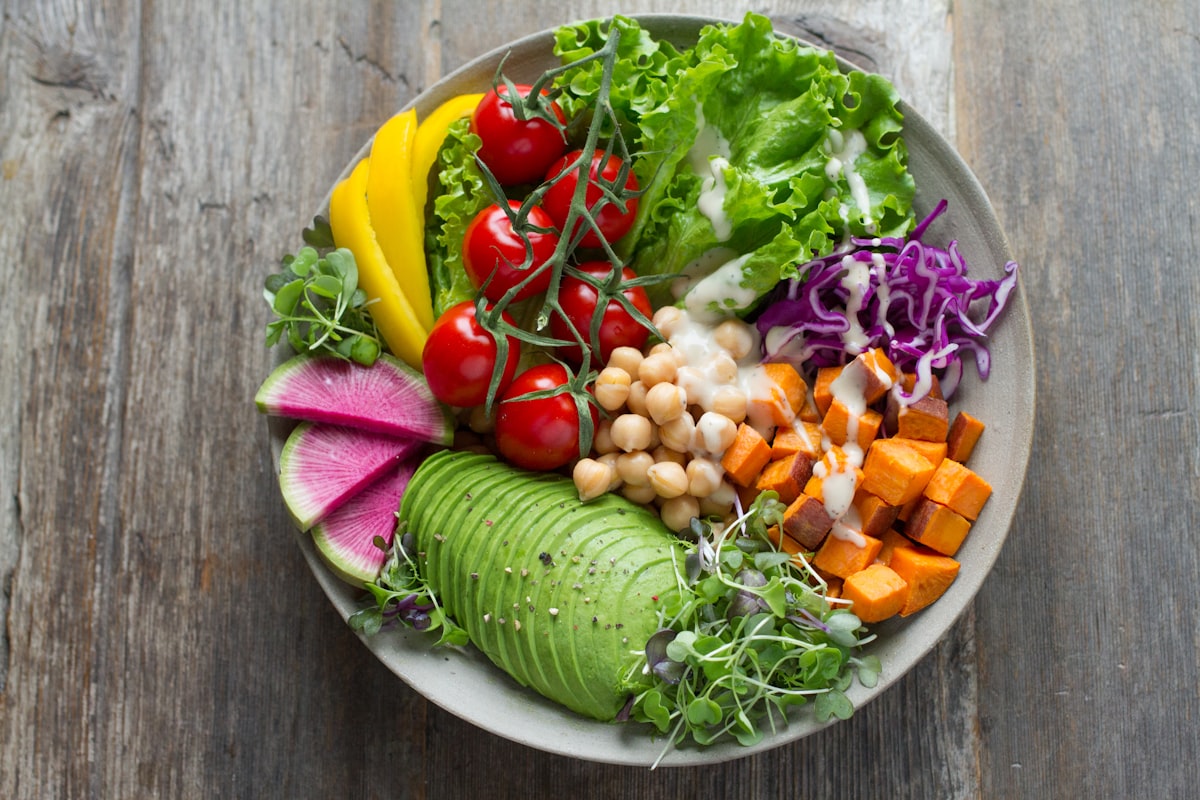
"Fibermaxxing" is everywhere right now — and for once, a food trend is actually backed by decades of research. The premise is simple: deliberately push your daily fiber intake toward (or past) the recommended target instead of hitting it by accident. It matters because the numbers are bleak: more than 90% of women and 97% of men fall short of daily fiber recommendations, averaging around 15 grams a day when they need far more.
Fiber is the rare nutrient that helps with weight loss, blood sugar, cholesterol, and gut health at the same time — with no supplements required.
What Is Fibermaxxing and Why Does It Matter?
Fibermaxxing means intentionally building every meal around a high-fiber anchor: legumes, whole grains, fruit with the skin on, vegetables, nuts, and seeds.
Why it works:
- Satiety without extra calories. Fiber adds bulk and slows gastric emptying, so you feel full on fewer calories.
- Steadier blood sugar. Soluble fiber blunts glucose spikes, which reduces the crash-and-snack cycle.
- A healthier microbiome. Fermentable fibers feed gut bacteria that produce short-chain fatty acids linked to lower inflammation.
- Better cholesterol and heart health. Soluble fiber binds bile acids, lowering LDL cholesterol.
- Regularity. The least glamorous benefit and often the most immediately noticeable one.
In studies where people simply added fiber without any other rule, they lost weight — fiber changes how much you eat before you have to think about it.
How Much Fiber Do You Actually Need?
The baseline targets:
| Group | Daily fiber target |
|---|---|
| Women (under 50) | 25 g |
| Men (under 50) | 38 g |
| Women (50+) | 21 g |
| Men (50+) | 30 g |
A practical rule of thumb is 14 grams of fiber per 1,000 calories eaten. If you're an active person eating 2,500 calories, that's about 35 grams. Fibermaxxers often aim a little higher — 40 to 50 grams — but there's no need to rush there, and going above ~50 g without enough fluid usually backfires.
15 Best High-Fiber Foods for Weight Loss
- Chia seeds — 2 tbsp: 138 cal, 10 g fiber. Absorbs up to 10x its weight in water and gels in the stomach.
- Lentils (cooked) — 1 cup: 230 cal, 15.6 g fiber. Cheap, fast-cooking, and 18 g of protein per cup.
- Black beans (cooked) — 1 cup: 227 cal, 15 g fiber. High in resistant starch that feeds gut bacteria.
- Raspberries — 1 cup: 64 cal, 8 g fiber. The highest fiber-to-calorie ratio of any common fruit.
- Avocado — 1 medium: 240 cal, 10 g fiber. Fiber plus monounsaturated fat for lasting fullness.
- Oats (dry, rolled) — 1 cup: 307 cal, 8 g fiber. Beta-glucan lowers LDL cholesterol.
- Broccoli (cooked) — 1 cup: 55 cal, 5 g fiber. Extremely low calorie density, high volume.
- Artichoke (medium, cooked) — 64 cal, 7 g fiber. One of the most fiber-dense vegetables available.
- Split peas (cooked) — 1 cup: 231 cal, 16 g fiber. The single highest-fiber cup on this list.
- Chickpeas (cooked) — 1 cup: 269 cal, 12.5 g fiber. Roast them for a crunchy, high-fiber snack.
- Pears (with skin) — 1 medium: 101 cal, 6 g fiber. Peeling it removes nearly half the fiber.
- Brussels sprouts (cooked) — 1 cup: 56 cal, 4 g fiber. Roasting makes them genuinely craveable.
- Almonds — 1 oz (23 nuts): 164 cal, 3.5 g fiber. Portion control matters; measure rather than pour.
- Air-popped popcorn — 3 cups: 93 cal, 3.6 g fiber. A whole grain disguised as a snack food.
- Sweet potato (with skin) — 1 medium: 103 cal, 4 g fiber. Keep the skin on for most of the fiber.
📷 Track these foods instantly
Scan any food from this article with our free AI scanner — get instant nutrition facts.
Scan Food Free →Hitting 30+ grams is easier than it sounds: oats and raspberries at breakfast, a lentil bowl at lunch, and roasted broccoli with dinner already gets you there.
How to Add More Fiber Without Digestive Discomfort
The most common fibermaxxing mistake is going from 15 g to 45 g overnight. Bloating, gas, and cramping follow — and people quit.
Do this instead:
- Increase gradually. Add roughly 5 grams per week and let your gut bacteria adapt.
- Hydrate seriously. Fiber needs water to move. Aim for 2 to 3 liters a day; without it, extra fiber can worsen constipation.
- Split it across meals. 10 g at three meals is far more comfortable than 30 g at dinner.
- Cook your vegetables at first. Cooked fiber is gentler than raw while you adjust.
- Move after meals. A 10-minute walk helps digestion and blood sugar.
- Watch sugar alcohols. Many "high-fiber" bars combine fiber with sweeteners that cause most of the discomfort people blame on fiber.
Sample High-Fiber Day of Eating
Breakfast (~14 g fiber) — Overnight oats: 1/2 cup rolled oats, 2 tbsp chia seeds, 1 cup raspberries, Greek yogurt.
Lunch (~16 g fiber) — Lentil and roasted vegetable bowl: 1 cup cooked lentils, roasted broccoli and sweet potato with the skin, olive oil and lemon.
Dinner (~12 g fiber) — Black bean and chicken burrito bowl: 3/4 cup black beans, brown rice, shredded cabbage, salsa, 1/4 avocado.
Snacks (~7 g fiber) — 1 pear with skin, 3 cups air-popped popcorn, or 1 oz almonds.
Daily total: roughly 45–49 g of fiber at around 1,900 calories — high protein, high volume, and genuinely filling.
The Bottom Line
Fibermaxxing isn't a crash diet; it's a shift in what anchors each plate. Legumes, berries, whole grains, seeds, and vegetables with the skin on will get most people from 15 grams to 35+ grams within a few weeks — with better fullness, steadier energy, and easier weight management as side effects.
The hard part is knowing where you actually stand. Scan your meals with FoodNutriScan to see fiber alongside calories, protein, carbs, and fat in seconds, and track your daily fiber total without weighing a thing.
Did you find this helpful?
Written by the FoodNutriScan Team
Evidence-based nutrition content to help you make smarter food choices.
Browse all articles →Ready to track your nutrition?
Scan any food and get instant AI analysis. Free, no subscription, no download.
Scan Your Food Free →