
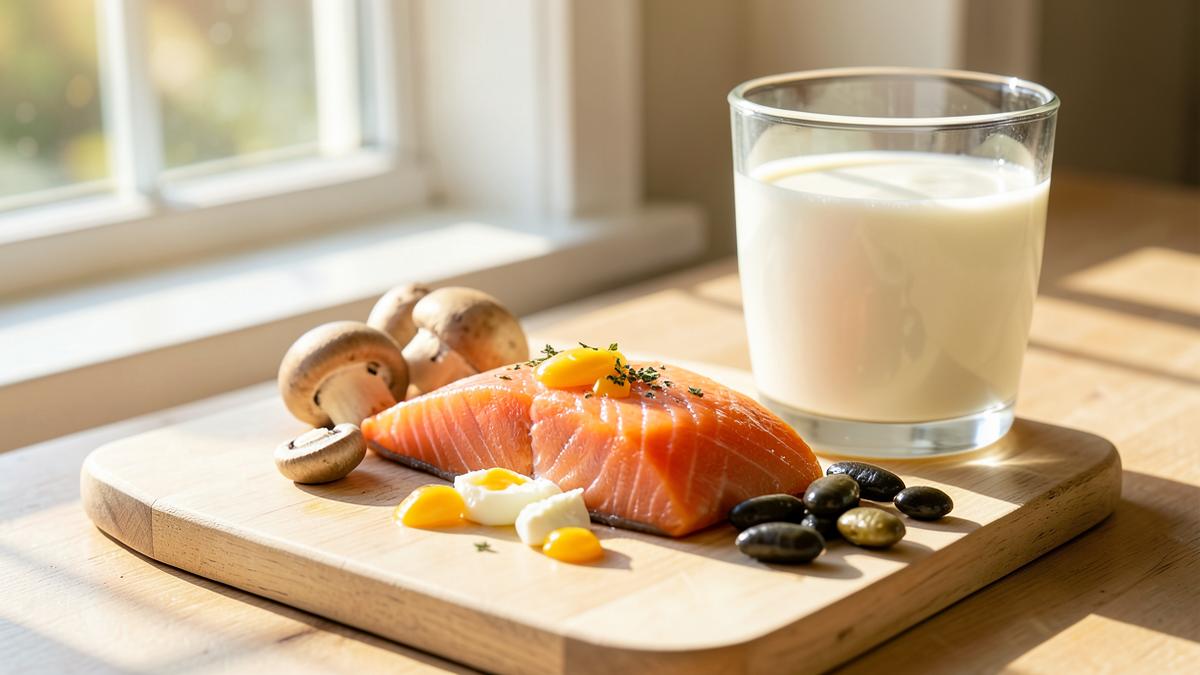
Vitamin D behaves more like a hormone than a vitamin. It regulates calcium absorption, immune function, muscle strength, and mood — and a large share of the population runs low on it, especially in winter.
Are You Deficient?
Blood levels are measured as 25-hydroxyvitamin D:
| Blood level | Status |
|---|---|
| Below 30 nmol/L (12 ng/mL) | Deficient |
| 30–50 nmol/L (12–20 ng/mL) | Insufficient |
| 50–125 nmol/L (20–50 ng/mL) | Adequate |
| Above 125 nmol/L (50 ng/mL) | Above requirement |
A blood test is the only way to know. Everything below is context, not diagnosis.
Common signs of low vitamin D
- Persistent fatigue that sleep does not fix
- Frequent colds and infections
- Bone or lower-back aching
- Muscle weakness, especially in the thighs and hips
- Low mood, particularly seasonal
- Slow wound healing
- Hair thinning
These overlap with many other conditions. Treat them as a reason to test, not a conclusion.
Who is most at risk
- People living above roughly 37° latitude in winter
- Darker skin tones — more melanin means less UVB conversion
- Indoor workers and anyone who uses full sun protection
- Adults over 65 (skin synthesis drops sharply)
- People with obesity — vitamin D is sequestered in fat tissue
- Anyone with coeliac disease, Crohn's, or other fat-malabsorption conditions
- Exclusively breastfed infants without supplementation
How Much You Need
| Group | Daily recommendation |
|---|---|
| Infants 0–12 months | 400 IU (10 mcg) |
| Children and adults 1–70 | 600 IU (15 mcg) |
| Adults 71+ | 800 IU (20 mcg) |
| Pregnancy and lactation | 600 IU (15 mcg) |
Many clinicians target 1,000–2,000 IU per day for adults who are insufficient, which sits well below the 4,000 IU tolerable upper limit. Correcting a diagnosed deficiency sometimes uses higher short-term doses under supervision.
📷 Track these foods instantly
Scan any food from this article with our free AI scanner — get instant nutrition facts.
Scan Food Free →Best Food Sources
| Food | Vitamin D | % of 600 IU |
|---|---|---|
| Cod liver oil (1 tbsp) | 1,360 IU | 227% |
| Rainbow trout, cooked (100 g) | 645 IU | 108% |
| Salmon, wild sockeye (100 g) | 570 IU | 95% |
| Salmon, farmed (100 g) | 250 IU | 42% |
| UV-exposed mushrooms (100 g) | 1,100 IU | 183% |
| Sardines, canned (100 g) | 190 IU | 32% |
| Fortified milk (240 ml) | 120 IU | 20% |
| Fortified plant milk (240 ml) | 100–144 IU | ~20% |
| Egg yolk (1 large) | 44 IU | 7% |
| Canned tuna (100 g) | 40 IU | 7% |
The honest summary: unless you eat oily fish several times a week or UV-treated mushrooms regularly, food alone rarely covers the requirement — which is why fortification and supplements exist.
Sunlight: How Much Is Enough
Roughly 10–30 minutes of midday sun on the arms and legs, several times a week, produces adequate vitamin D for lighter skin in summer. Deeply pigmented skin may need 3–5 times longer. Through winter at higher latitudes the UVB angle is too low to produce any vitamin D, regardless of how long you stay outside. Glass blocks UVB, so a sunny window does nothing.
Supplement Notes
- D3 (cholecalciferol) beats D2 at raising and maintaining blood levels
- Take it with a meal containing fat — absorption improves substantially
- Pair with vitamin K2 and magnesium if you supplement long-term; both are involved in directing calcium into bone
- Daily dosing beats weekly megadoses for steady levels
- Do not exceed 4,000 IU/day without a blood test and clinical guidance
Frequently Asked Questions
Can I get enough vitamin D from food alone? Only with a diet unusually heavy in oily fish or UV mushrooms. For most people, sun plus supplementation does the work.
Does vitamin D help immunity? Correcting a deficiency reduces respiratory infection risk in trials. Taking extra when you are already adequate shows little benefit.
Can you take too much? Yes. Chronic very high intake causes hypercalcaemia — nausea, kidney stones, confusion. This effectively never happens from sun or food.
Should I test? Worth it if you are in a risk group, have symptoms, or plan to supplement above 2,000 IU daily.
Best time of day to take it? With your largest fat-containing meal. Some people find late-night dosing disrupts sleep, so morning is a reasonable default.
Curious how much vitamin D is on your plate? Scan your meal with FoodNutriScan for a complete nutrient profile in seconds.
Did you find this helpful?
Written by the FoodNutriScan Team
Evidence-based nutrition content to help you make smarter food choices.
Browse all articles →Ready to track your nutrition?
Scan any food and get instant AI analysis. Free, no subscription, no download.
Scan Your Food Free →